

The shot, p.1
The Shot, page 1


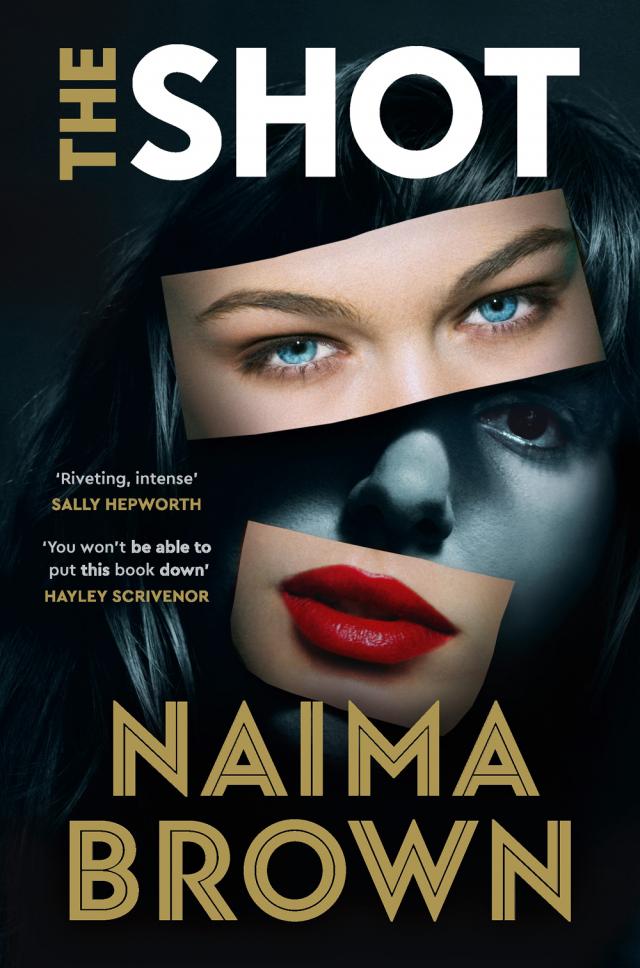
About The Shot
How much would you sacrifice for another shot at the perfect life?
Producer Mara Bolt is the queen of reality TV. Ambitious to the point of ruthlessness, Mara will do anything for ratings. When she meets Kristy Shaw, Mara is certain she’s found the star of her newest series, The Shot.
Kristy is languishing in her small hometown and a dead-end job, pining for her first love, Max Irving. The Shot offers her a Total Body Transformation – extreme plastic surgery to render her unrecognisable – as a way to recapture Max’s affections under a new identity. But there’s a catch: if she doesn’t secure his heart in thirty days, she must have her surgeries reversed, and go back to her previous life.
As cameras start rolling, Mara and Kristy both feel there is something happening behind the scenes – something that threatens to reveal old wounds and create new secrets. If they are going to keep the show on track, they must repress the truths and desires that lie just beneath the surface.
The Shot is a rollercoaster read about our obsession with beauty, the trappings of success, and the desperate, outrageous lengths we will go to for love and ambition. It asks the question: where is the line between entertainment and exploitation?
CONTENTS
Cover
About The Shot
Dedication
Epigraph
Prologue Make-believe
Part One Preproduction
All that Wanting
Get Real
Scalped
Gimlets and Pie
Sugar Baby
Sharks
Part Two Production
We Are Not Books
Little Choices
No Mud, No Lotus
Mortification of the Senses
Wabi Sabi
The Slayer
Imogen Speaking
Control Room
Furlough
Raw
My Body My Choice!
Blackout
Part Three Postproduction
Run
Hunt
Mud
The Devil in the Details
The Imogen Lie
The Fourth Wall
Changeling
Mistress of Ceremonies
Total Body Transformation
Roll Credits
Epilogue I Contain Multitudes
Acknowledgements
About Naima Brown
Copyright page
Dedicated to my mom, for passing on her love of reading and buying me heaps of books. And to my dad, for being a wordsmith himself. And to Genevieve, Lila, Katy and Ed – the stars in my sky.
‘Now, there’s an idea. There’s a part of me, the producer side, that knows it would be epic television, good or bad. It could be like the Hindenburg – the greatest disaster ever – but even then that would be great TV.’
~ American host of The Bachelor when asked if he’d consider casting his ex-wife of twenty years as the ‘Bachelorette’
PROLOGUE
MAKE-BELIEVE
When I was four years old, I put on the fluffy brown cat Halloween costume I’d worn the previous year, and I pretended to be a kitten for a week straight. And I’m not talking for a little bit here and there, between playing with dolls and coloring, I’m talking an entire week, nonstop. When my parents talk about it, they still seem scarred. It was, my mom says, cute for about five minutes. It lasted thousands of minutes.
I only answered to the name Fluffball.
I insisted on eating all my meals on the floor, kneeling on all fours, lapping.
I answered every question with a sinister meow.
I would curl up on my parents’ laps and paw at them.
I refused to take the costume off.
I refused to bathe.
I cajoled them into dangling toys for me to bat with my hands and feet. When they refused, I bit and snarled and scratched. Fluffball could be mean.
I had first decided to be Fluffball on a Saturday morning, and my parents hoped that by the time Monday rolled around and I was dropped at day care, I’d drop the act. But no. Fluffball had other plans. My mom had just turned the key in the ignition, and was about to make her escape, when a frantic minimum-wage day-care attendant pounded on the car window. She wasn’t paid nearly enough to deal with Fluffball.
My parents tried everything to snap me out of it. Bribes of toys and treats were offered. Threats to take away toys and treats were made. I was ignored. I was begged. My mother says the low point for her was when she referred to me as Fluffball without even thinking about it. She’d capitulated. Fluffball had won. Fluffball was exhausting. Fucking Fluffball.
And then, a week later, I stopped.
Fluffball was gone, and I was Kristy again.
But where did Fluffball go? Was she gone gone? Or had she just been absorbed into the socially acceptable parts of my personality? Distributed throughout my identity? My mom says she read an article that explained that I’d simply experienced a very pronounced but totally normal bout of deep imagination play – more commonly known as make-believe. Apparently it’s good for us when we’re little. Not so much when we grow up.
I don’t remember that week. But, from time to time, out of the blue, I still have the urge to drink milk from a dish, or to curl up in a ball in a shard of sunlight on the floor. To purr. I don’t, of course, because that would be insane.
And besides, it’s already quite crowded in here.
PART ONE
PREPRODUCTION
ALL THAT WANTING
Wanting things is a sick feeling; all Kristy Shaw does these days is want things.
From the moment she clocks in at Irvings to the moment she walks out of its cool air-conditioning and drone of easy-listening muzak back into the humid mosquito-buzzing night she is in a constant State of Want. The Queen of Wantsville. Wanty McWanterton. She wants the perfumes in their bottles and vials like potions out of Disney movies – eye of newt, virgin’s tears, unicorn blood. She wants the cosmetics arranged like glittering candies and cupcakes in glass cases. She wants the frou-frou high tea with the polished silver service and the posh little sandwiches – one slim slice of cucumber, hydroponic watercress, crustless – at the Irvings café where everyone speaks in conspiratorial whispers about lives Kristy can’t fathom, shopping bags at their feet like sleeping dogs. She wants to cling to the bling twinkling under lock and key. She wants the expensive jeans, as shredded and distressed as she feels. She wants the creamy sheer blouses that pour over you like melted butter and the skull-printed scarves and the heels with the coveted red soles. Most of all she wants to have it all so easily and effortlessly that she can move around the world as if she doesn’t actually have it at all, to be cavalier and glib about her bounty. She wants it all. She wants it so badly she feels bile rise in her esophagus. And above all, she wants Max. She is nauseous with the Wanting.
Every day when Kristy clocks in to begin her shift, she has the same thought: This is a cruel fucking joke. She got the job her senior year when she and Max were still together, three years ago now. During her first day in the handbag department, while being trained by the foul-breathed, birdlike Irma who’d worked at Irvings Department Store since its ribbon cutting in 1964, Kristy daydreamed about the day when she’d be her boss, when she and Max would take over from his parents, Mr. and Mrs. Harold and Rose Irving, and continue the family business. Their future kids – first a boy, then a girl – both named after a natural phenomenon or a city – River and Paris, Storm and Florence – would grow up playing hide and seek in the lingerie and pajamas department on the third floor, crawling under the silk hems of robes, racing under a canopy of lace and cotton, flannel and linen. If there was anything Kristy might want – a new lipstick, some pillowcases, maybe a juicer – she could just take it, because she would be a Mrs. Irving then too, and things would be her right. That was Kristy’s plan, anyway. Apparently Max had plans of his own that didn’t involve her.
She knows she shouldn’t have been surprised by his subterfuge, his ability to have coordinated his northward migration without her knowing; there had always been two Maxes. There was the Max who belonged to the posh estates of the Puerto Seguro Lagoon, to ski trips and the yacht club and tennis lessons, and the Max who belonged to her. The two Maxes were rarely, if ever, in the same place.
It is her Max she is thinking about now, as she feels herself reducing to vapor under a ruthless sun, dissipating bead by salty bead of perspiration. They’re not welcome – these thoughts of Max. They are relentless intrusions. Memories that taunt and jeer. See, they tell her, see what you lost? She glances across the dirty plastic table – smeared with greasy fingerprints and the crumbs of other people’s muffins – at Denise, who is lost in her phone. She shifts her gaze and studies the frozen Starbucks confection in her own hand, and a memory says: You have traded Champagne for watered-down sugar, sun for shade, work for rest, Max for Denise.
She is remembering a blazing hot summer day like this one, when Max had texted her a one-word question: Adventure? She’d responded with a gif of a girl jumping up and down enthusiastically. Fifteen minutes later she was in his car and he was driving them west toward the St. Johns river. They sang along to the oldies’ station. As they got further and further out of town, the melodies became staticky and warped, which only made them feel freer, more unbound. Max would never sing like this in front of anyone else but her, she knew. He’d never let his guard down, or be silly, or risk embarrassment in the company of other Lagoon kids.
He’d snagged a bo ttle of Champagne from his parents’ well-stocked cellar and packed it, along with some hastily made ham and cheese sandwiches, into a cooler which he carried along the narrow trail down to where the river had carved a rest area for itself, where its rushing current slowed and swirled and deepened into a swimming hole. Kristy, walking behind him, swatting gnats out of her face and slapping mosquitos on her arms, marveled at the cord-like muscles on his back – a tangled knot of snakes – visible through his sweat-soaked t-shirt, and the way he passed through alternating shafts of golden syrupy light and dense mossy shadow, flickering like a hologram.
They’d spent the day skinny-dipping in the cool, fresh water. They’d drunk their Champagne – Kristy’s first – straight out of the bottle, under the shade of a tupelo tree, and Kristy felt her whole body go pleasantly fizzy. They ran ice cubes along the napes of each other’s sweating necks. Max lingered over the little birthmark at the base of her skull, half-buried in her hair, and kissed it. They napped on top of the blue tartan picnic blanket he’d brought, their limbs entwined like the roots of the mangroves all around them. They woke up hungry and ate their sandwiches, holding them with both hands like children while they dangled their feet in the water, feeling the lazy current pass between their toes. Max squeezed her hand and pointed to a manatee, its wide back festooned with shimmering drops of sunlight, gliding past them, stilling their pulses with awe.
It had been a perfect day.
Max was good at creating days like this: out of time, away from their real lives. Days where they talked – about school, about sports, about movies or funny YouTube videos they’d seen – Did you see the guy try to cannonball into a frozen swimming pool? They’d explored hypotheticals – Would you choose invisibility, flight, or telepathy as your superpower? (Max chose telepathy, which bewildered Kristy, who was terrified by the idea of knowing what people really thought of her. She chose flight.) Would you go live in a colony on Mars even if it meant you’d never come back to Earth again? (Kristy a breathless yes, Max a resounding no.)
They enjoyed debating the ethical quandaries they’d learned about in school – the Prisoner’s Dilemma (they promised each other that if they ever got caught robbing a bank together, they’d both confess and share the sentence, rather than hang the other one out to dry), the Experience Machine (they agreed that they would rather experience real life, with all its pitfalls, than live like the plugged-in humans in The Matrix) and the Trolley Problem, which gave them more trouble. The question was whether you, standing at the controls of the railcar, would continue down the track with five people standing on it – killing them all – or flip the switch and barrel down a different track, killing just one person instead. As they discussed it, it became clear that the question was really about whether doing nothing was just as bad as doing something. In this formulation, doing nothing killed more people than doing something. But doing something roped you in, made you a killer. It didn’t matter that it wasn’t your fault that there were people on the tracks to begin with. They never did settle on an answer to that one.
They avoided topics about more concrete matters, topics that might veer into territory that would expose their vastly different worlds – their mothers didn’t even shop at the same grocery stores, let alone attend the same events or make the same kind of plans for school holidays. He never invited his friends along, or encouraged her to bring Denise. And while he didn’t hide the fact that they were a couple when they were at school, there, in front of his friends and teachers, he was a different Max. He did seem to enjoy the way the Lagoon girls looked at him when he had his arm around Kristy, but he found a way to claim her while at the same time maintaining a certain distance between them in the halls of Puerto Seguro High School, never allowing their bodies to merge, their breath to sync, their fingers to knit together in front of anyone else. There were no witnesses to her private Max. Nobody, she thinks now, to verify that he’d even existed.
‘What I don’t get is why he’d break up with me on graduation?’ she’s lamenting to Denise for the umpteenth time. Just saying the words aloud is enough to make her saliva turn to seawater. It had been in the sea that he’d told her. The morning of graduation they’d met – as they often did – for a swim at Seguro Beach before school. Most mornings they would run toward the ocean and launch themselves into the warm water, diving under the waves for as long as they could before rinsing off under the cold beach shower. She’d loved the feeling of the waves crashing and roiling above her, the fear that came with every dive – Will I go deep enough? Or will I be taken and tumbled like a stone? – followed by relief when they broke through the water, breathless and smiling at each other, just enough time to fill their lungs before the next wave came. But that last morning, their caps and gowns in their backpacks on the sand, they’d swum beyond the crashing waves, past the break into the calm sea. It was there, treading water, that he’d said, ‘I’m leaving tomorrow, Kris.’
‘Where are you going?’ she’d asked, tucking a wet strand of hair behind her ear.
‘To New York,’ he’d said, and she saw that he wasn’t smiling anymore.
‘Like, for the weekend?’ she’d asked, troubled by the shadow that had passed over his face.
‘No, Kristy,’ he’d said, ‘for school. For college. So at least four years.’
All she could do was stare at him dumbly, her legs kicking furiously under the calm surface of the water.
‘So, I think we need to, you know, break up.’ And then he’d taken a deep breath and gone under, leaving her to wonder at the space where he’d just been, and when he resurfaced a moment later, she saw it all over his face: relief.
She looks at Denise now, hoping that maybe this time her friend will have the words that might work on her heart, that she’ll tell her something that will make it make sense.
As always, they are taking their lunch break under a green Starbucks umbrella across the street from Irvings, their caramel Frappuccinos sweating through the plastic cups. Denise lights a cigarette, inhales, and exhales out of the corner of her mouth. She’s already developing the telltale lines around her lips: smoker’s lines like old lady Irma. Kristy has always found smoking repellent. Denise smacks her sandal against her heel in time with the music. Kristy knows this song, but can’t place it . . . that red-headed fairy lady with the breathy voice singing about the dog days of summer.
Denise and Kristy have known each other since they were knobbly-kneed kindergarteners in hand-me-downs. Denise and her family used to live in the same trailer park as Kristy, and their mothers had spent long mornings sitting together on plastic lawn chairs under the shade of the park’s only tree – a sprawling, generous southern live oak that they all refer to as The Queen who, for her part, seemed to take pity on them, her shade-poor subjects, and spread her wide leafy canopy and network of tangled branches over them, sorry that she couldn’t do more. The two mothers would drink Mountain Dew or weak, sugary coffee while Kristy played with Denise and her two older brothers; intense, sweaty games of freeze tag, hide-and-go-seek and red rover, replete with scraped elbows and days-long grudges. And the darker games of childhood, too; games of death and resurrection – light as a feather, stiff as a board – dares to venture alone into unlit bathrooms and say Bloody Mary three times into the mirror.
‘You don’t have any brothers or sisters?’ Denise had asked her all those years ago, two gummy gaps where her new front teeth hadn’t yet emerged. ‘No,’ Kristy had told her, ‘my mom says I’m all we need to be a family.’ This, of course, was the line that Kristy’s mom had told her whenever Kristy broached the topic of siblings. Pulling her onto her ample lap, Deborah Shaw – who always smelled to Kristy of pancake batter, something doughy and sweet, yet raw and unfinished – would tell her that God had seen fit to give her a daughter who was worth three, and that she, Kristy herself, was what had single-handedly transformed them into an Official Family. Kristy basked in this knowledge, feeling quite proud of the achievement – awed that her mere existence could have such an impact on the lives of grown-ups. It would be years before she learned that her mother couldn’t have more children – that Kristy’s birth had begun with injury and rupture that had brought her mother to the brink of death.






